NanoXF: 11000 -
11 MPixel Fiber Optic Input X-ray Camera Applications:
X-ray micro tomography • industrial and medical imaging
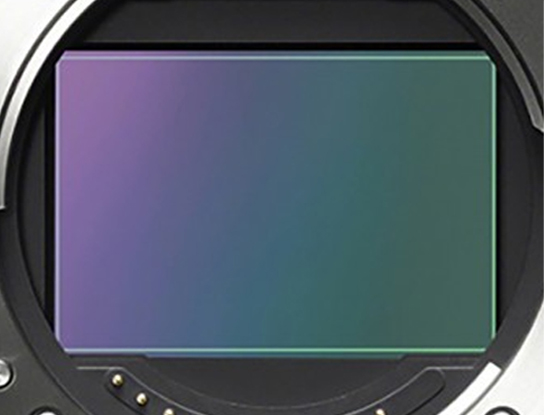
Highest spatial resolution 4008 x 2672 imaging
array, 9 μm x 9 μm pixels
1.4:1 fiber-optic
Large field of view (50 mm x 33.3 mm)
Imaging area 36 x 24 mm (CCD)
Proprietary Fiber Bonding Process
Max. frame rates 4.63 fps with Camera Link interface,
3.0 fps - with FireWire interface
Cooling temperature -10 °C typical, Specified
at ambient temperature of +20 °C
Data interface Camera Link or IEEE 1394a (FireWire)
The Princeton Instruments/Acton
NanoXF: 11000 is a low noise camera designed
for lensless, direct imaging of phosphor screens and
other lambertion sources. This advanced design based
on PI/Acton’s cooling technology offers up to -15 °C
cooling with air. The unique camera design with fiberoptic
extended outside the vacuum offers outstanding flexibility
to optimize system performance at any x-ray energy.
The low-noise electronics and compact design makes this
camera perfect for OEM applications. The high speed
operation delivers 4.63 frames/sec. With Camera Link
interface camera can be used for steady state as well
as high speed applications. With precise CCD temp control
means that the camera can be used for demanding applications
such as x-ray microtomography.
Computer
tomography (CT) has been used as one of the most versatile
techniques in the medical field since 1973 for non-invasive
investigations. Though CT has been used in many other
fields such as industry, archaeology, life and geosciences,
it is limited in spatial resolution. The best spatial
resolution achievable by conventional CT instruments
is ~ 0.5 mm. Unfortunately, to examine the internal
structure of extremely small objects at a sub-millimeter
scale, this technique is insufficient.
Micro
computer tomography (µCT)overcomes this limitation with
the availability of high-resolution, high-dynamic range
CCD cameras, high-resolution scintillators, micro-focus
X-ray tubes with an optical focal spot of < 1 µm
(or synchrotron X-ray source), and software algorithms
to reconstruct 3D images. A typical system consists
of an X-ray source, a rotating table with a sample holder
and a CCD camera with a computer. Depending on the X-ray
source, i.e., a micro-focus X-ray tube or a synchrotron
X-ray source, a fiberoptic- or optical lens -coupled
system is used to project an image onto a CCD camera.
The best resolution delivered by these instruments is
around 4 µm.
Dessert
Lizard Tomogram: 10243 voxels, @ 4 µm per voxel
Tissue
engineered bone from a pig orbit reconstruction Note:X-ray
CT Images: Courtesy of ANU-XCT