TriVista-Triple Raman Spectrometer
Offering High Stray Light Rejection and Upmost Flexibility
 

  • Variable bandpass tunable filter
  • Subtractive and additive operation
  • High stray light rejection
  • Modular and flexible, will grow with your needs
  • multipurpose sample chamber
  • Easy assembly/disassembly for other configuration
  • Confocal Microscopy option
  • Kinematic grating mounts and motorized slits
  • Multiple exit ports and Input ports
  • Stokes/AntiStokes accessory
  • Supports CCD,ICCD,EMCCD,InGaAs Array,PMT,IR photocells
  • Developed, tuned and assembled in Germany
  • Application supported by Roper Scientific GmbH
  • On site installation, calibration and training
  Triple Raman Spectrometer meets today's requirements like flexibility and optimum price performance ratio. The modular design allows upgrading from a single stage system to a triple Raman system. The TriVista is based on the ARC SpectraPro series and is developed, tuned and finished in Germany by S&I GmbH, a member of the Roper Scientific GmbH network.
Multipurpose Raman sample chamber
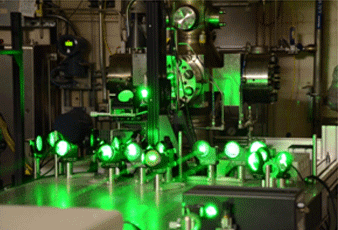
analytical multipurpose Raman sample chamber for liquids, gases and solids. Offers x, y and z sample movement, multipass mirrors, retro collecting mirrors, f/2 UV entrance optic, holder for polarizes, analyzer interference filters, scramblers, quarter-wave plates, holographic notch filters, iris and slit option for stray light suppression and a goniometry head option.

Download: TriVista Data Sheet | TriVista Brochure | Laser Delivery System Datasheet
Typical Specifications (All values are typical and depend on excitation, sample, optics, and slits width used)
 

Setup Gratings Parameter in cm -1 in nm
SUBTRACTIVE DOUBLE-CCD DETECTION
Subtractive double 500 mm stage 900 l/mm, all stages total CCD coverage 860 25
500 mm final stage Resolution * 1.445 0.036
SUBTRACTIVE DOUBLE-CCD DETECTION
Subtractive double 500 mm stage 900 l/mm, subtractive total CCD coverage 830 23.5
500 mm final stage 1800 l/mm final stage Resolution * 0.6 0.018
SUBTRACTIVE DOUBLE-CCD DETECTION
Additive triple 500 mm stage 1800 l/mm, all stages total CCD coverage 370 10.5
Resolution* 0.44 0.018
SUBTRACTIVE DOUBLE-CCD DETECTION
Additive triple 500 mm stage 1800 l/mm, subtractive total CCD coverage 370 10.5
500 mm final stage 2400 l/mm final stage Resolution * 0.4 0.011
ADDITIVE TRIPLE CCD DETECTION
Additive triple 500 mm stages 900 l/mm, all stages total CCD coverage 370 10.5
Resolution * 0.44 0.015
ADDITIVE TRIPLE CCD DETECTION
Additive triple 500 mm stages 1800 l/mm, all stages total CCD coverage 160 4
Resolution * 0.18 0.005
ADDITIVE TRIPLE CCD DETECTION
Additive triple 500 mm stages 1800 l/mm double stage total CCD coverage 160 4
2400 l/mm in final stage Resolution * 0.15 0.004
ADDITIVE TRIPLE PHOTON COUNTING
Additive triple 500 mm stages 900 l/mm, all stages Resolution 0.10 0.030
ADDITIVE TRIPLE PHOTON COUNTING
Additive triple 500 mm stages
1800 l/mm, all stages
Resolution 0.6 0.015
  
all spec measured at 532 nm excitation | * Bandpass per pixel for Spec-10 ® Camera with 20 µm Pixel (Spec-10:100 or 400)
Versions of 750 mm focal length and/or with other grating combinations on request.


The most advanced triple spectrometer in the world: TriVista™

TriVista offers the highest spectral resolution and extreme stray light rejection required for UV, resonance Raman and photoluminescence applications. Its unique optical design (patent pending) allows easy switching between additive and subtractive modes and it can be easily reconfigured to handle a multitude of fluorescence applications

img1.gif

CCD detectors
The TriVista is hard and software compatible with high performance Princeton Instruments detector systems.

Single Point Detectors
For efficient measurements at single data points, a selection of detectors is available, ranging from cooled InGaAs solid state in the NIR to photon counting photo multiplier tubes in the UV-Vis.

The Raman Microscope
The Raman Microscope Systems from Spectroscopy & Imaging offer new unmatched flexibility combined with easy handling. We deliver solutions of compact systems with medium resolution up to highest resolution instruments performing best stray light rejection, needed for low frequency Raman spectroscopy. The perfect instrument to be used as "work horse" and powerful research tool as well.

Features
  • Multiple Laser Wavelength Option, down to deep UV
  • Single or Triple Spectrometer Setup
  • High Sensitivity Detectors from UV to NIR
  • AFM coupling, Cooling and Heating Stages
  • Possibility of Laser Safety Class 1
  • Fiber Probe and Macro Chamber Option

Micro Raman systems
are based on the Olympus microscopes BX 51, BX51WI and IX 71, upright and an inverted setups. The confocal Raman microscope option offers a spatial resolution in the micron scale. A software driven XYZ motorized and piezo stages enable automated mapping. Attached to the microscope is the Raman Interface. This optical box incorporates the Notch Filter (needed with single spectrometer setup only) and may contain additional optics like polariser, scrambler, etc. Different lasers can be attached to the Raman Interface, which allows easy change of the excitation wavelength. The modular setup allows integrating all lasers. Our intention is, to fulfill every customer’s needs of spectral resolution and the limit of Raman detection. So we combine the microscopes with either a single spectrograph, the MonoVista series or the TriVista triple spectrometer. This offers compact systems with medium resolution and lowest Raman signal of 100 cm with the MonoVista setup. To perform low-frequency Raman spectroscopy, we provide the TriVista spectrometer with a detection limit below 10 cm or best spectral resolution.

System setup and integration
Our applications team is prepared to respond to your application and provide a laser beam steering system, sample chamber, polarization optics, emission light transfer to the spectrometer, and so on. Adding gratings can be done in the lab of the user. Spectrometer setup and calibration values go into the spectrometers memory and need no extra efforts in the system computer. Changing the actual use between CCD and PMT or additive and subtractive mode needs no special user training.